Retail and delivery
Order in a few taps
A catalogue, payments, delivery and repeat orders. Everything your customer needs to make a purchase.
Put your service in your customer’s pocket. We build apps for orders, bookings and repeat purchases — from the first idea to launch on the App Store and Google Play.
Clear scope · Work in stages · Your source code
Built around your goalsFeatures your customers actually need
From design to launchThe whole process with one team
Ready to evolveA first version and a plan for growth
Closer to your customers
Make everyday tasks easier, so customers can come back to your business with less effort.
A catalogue, payments, delivery and repeat orders. Everything your customer needs to make a purchase.
Choose a service and a time, get reminders and view past visits. Less back-and-forth, easier booking.
Accounts, rewards, subscriptions and support. Stay close to your customers after their first purchase.
Tasks, requests, routes and photo reports. A tool for your team that connects to your existing systems.
Start with your idea
Answer 5 short questions. We’ll use your answers to prepare a proposal covering features, stages and development budget.
Already have a project brief? Let’s discuss it
One product. The right platforms.
We recommend an approach based on your features and budget, and explain the trade-offs clearly.
An interface that feels familiar on iPhone. Native Swift development suits apps that need deep integration with iOS features.
An app for different screen sizes and supported system versions. Native Kotlin development, tested on real devices.
A shared foundation for iOS and Android, for example with Flutter. We check whether it suits the features and integrations you need.
Designed to look good. Built to work.
Bring a clear interface and your business processes together. A customer places an order — your team sees it in the system.
Profiles, history and user roles.
Purchases, bookings and status updates.
Useful updates at the right moment.
Connect your website and business systems.
Manage content, orders and settings.
Understand how people use your app.
The app development process
We agree on the scope, share working versions and follow a clear delivery plan.
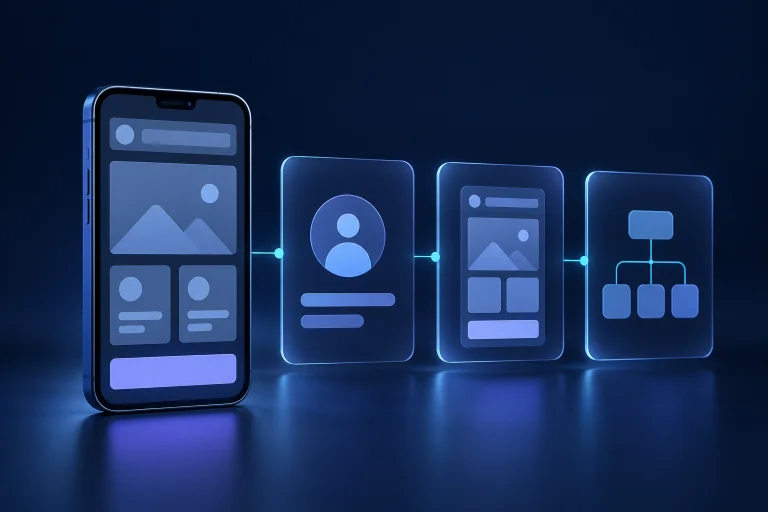
Explore your audience, key journeys and integrations. Decide what belongs in the MVP and what can come later.
Project scope and delivery plan
Map the user journey and show how the screens will look. Agree on the interface before development begins.
Prototype and screen designs
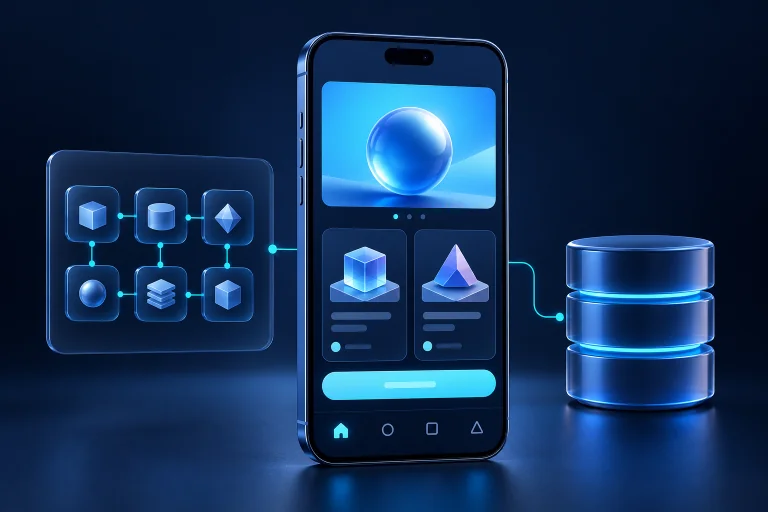
Build the app and backend, connect APIs and business systems. Share working builds as the product takes shape.
Working builds you can review
Check sign-in, forms, orders and payments on devices. Test weak connections, interruptions and error handling.
A tested version before release
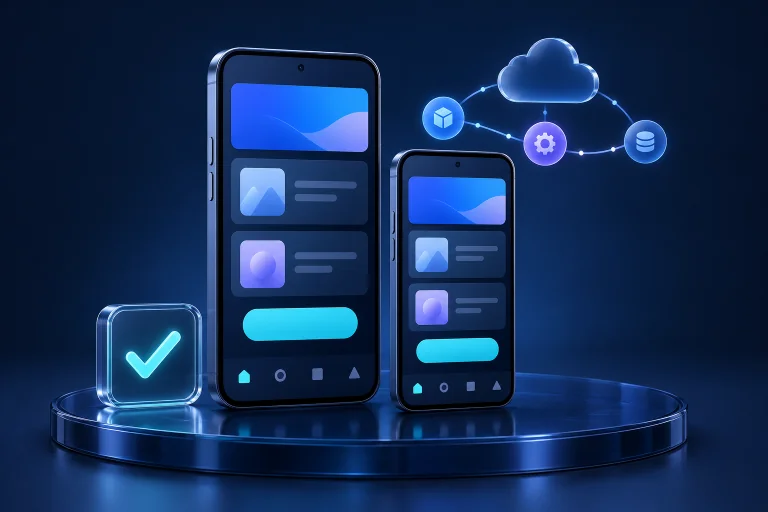
Prepare builds, descriptions and screenshots for the stores. Help with submission and responding to review feedback.
Release after store approval
Hand over code, designs and access as agreed. Plan support, updates and the next set of features.
Your product and a roadmap
Start at the right scale
You don’t need every feature on day one. We’ll help define a first version that solves a real customer need and estimate it before work begins.
One complete journey, such as choosing a service and booking it. A practical way to test an idea with real users.
Multiple journeys, user roles, integrations and backend logic. Suitable when your goals and requirements are clear.
Platforms, features, design, backend, integrations and testing. The proposal sets out stages, development fees and payment terms. Store accounts, hosting and paid services are accounted for separately. Store review timelines are determined by the platforms.
We agree on the handover of code, designs and rights before work starts.
Store accounts and infrastructure belong on the business owner’s side.
We agree separately on updates, tasks and response times.
Before we begin
Yes. Tell us who the app is for and what its users should be able to do. We’ll help turn the idea into user journeys and a scope for the first version. A detailed estimate follows once the features, platforms, integrations and backend requirements are clear.
The choice depends on your features and product plans. Native development uses the tools of each platform separately. Cross-platform development provides a shared foundation but still requires platform-specific setup and testing. We check the required SDKs, device features and future maintenance needs before recommending an approach.
Yes. An MVP should include one complete core journey, such as choosing a service and booking it, or placing and paying for an order. Other features can follow in later versions. This lets you use real customer behaviour to guide product decisions.
The timeline depends on features, platforms, design and API readiness, integrations and approvals. Before work starts, we prepare a schedule with deliverables for each stage. Store review is a separate process; its timing and requests for changes are not entirely within the development team’s control.
Yes, provided the systems have a suitable API or a way to exchange data. We check documentation, access, synchronisation rules and limitations at the start. A website and an app can share a catalogue, users and orders. If an API needs to be built, we include it as a separate part of the estimate.
Preparation and submission can be included in the agreed scope. Release requires the product owner’s store accounts, listing materials, data disclosures and working features. We help with technical preparation and review feedback. Store approval and review timelines are decided by the platforms.
We agree on the handover of code, designs, documentation and rights before work begins. We recommend registering store and infrastructure accounts to the business owner and giving the development team role-based access. External libraries, licences and paid services are listed separately at handover.
An app may need bug fixes, updates for new iOS and Android versions, server maintenance and new features. Support scope, response times, update frequency and fees are agreed separately. Tracking crashes and key user journeys helps guide improvements after launch.
Let’s talk about your idea
Bring a detailed brief or just an idea. We’ll help identify the next step and prepare a proposal.
 Telegram