A strong B2B website gives each type of buyer a clear route: what you provide, where it is used, why your team is credible, what technical detail is available and how to request a quote. The structure should follow the customer’s decision process, not the company’s internal department chart.
Map the buying journey before designing pages
Technical buyers, procurement teams and owners often arrive with different questions. Some search a specific product or specification. Others need to establish whether a supplier can deliver a certain type of project. The website should meet both groups without forcing them through generic marketing copy.
Start by defining the commercial questions that repeatedly appear before a call: application, material, capacity, delivery geography, certification, process and budget context. Those questions should shape the navigation and page hierarchy.
Core pages for a B2B site
| Page type | Its job in the sales process |
|---|---|
| Product or service pages | Capture specific demand and explain use cases, specifications, options and next steps. |
| Industries and applications | Show the visitor that the offer is relevant to their environment, problem and compliance needs. |
| Engineering or expertise | Explain how the work is delivered and make technical capability understandable before a conversation. |
| Projects and case studies | Provide proof that the team has solved comparable problems. |
| RFQ and contact paths | Turn a confident visitor into a structured request with the details sales needs to respond. |
Turn expertise into proof
B2B visitors are rarely convinced by broad claims such as “high quality” or “individual approach”. Proof is more useful: project photos, material details, process diagrams, certifications, specifications, delivery regions and a clear explanation of the people involved.
Original project evidence also makes a page stronger for search and AI-assisted discovery because it adds information that cannot be copied from a generic competitor article.
Make the enquiry path easy
The final action should match the purchase. A technical or high-value project may need an RFQ form rather than a vague “Contact us” button. Ask only for details that help the first response: product or service, country, capacity or scope, timing and a contact method. Keep a visible alternative for email, phone or WhatsApp where relevant.
A first-time visitor should be able to answer four questions in under a minute: What does this company do? Is it relevant to my task? Why should I trust it? What should I do next?
FAQ
Questions clients ask before making a decision
How many pages does a B2B website need?
There is no universal number. The site needs enough distinct pages to answer the commercial intent behind products, services, industries, technical questions and locations without creating thin duplicates.
Should Google Ads send B2B traffic to the homepage?
Only when the homepage precisely matches the query. Product- or service-specific searches normally perform better when they land on a closely matched page with evidence and a relevant quotation path.
What should a B2B request-for-quote form ask?
Ask for the minimum information needed for a useful first response: product or service, market, project scope or capacity, timing and contact details. Longer qualification can happen after the first submission.
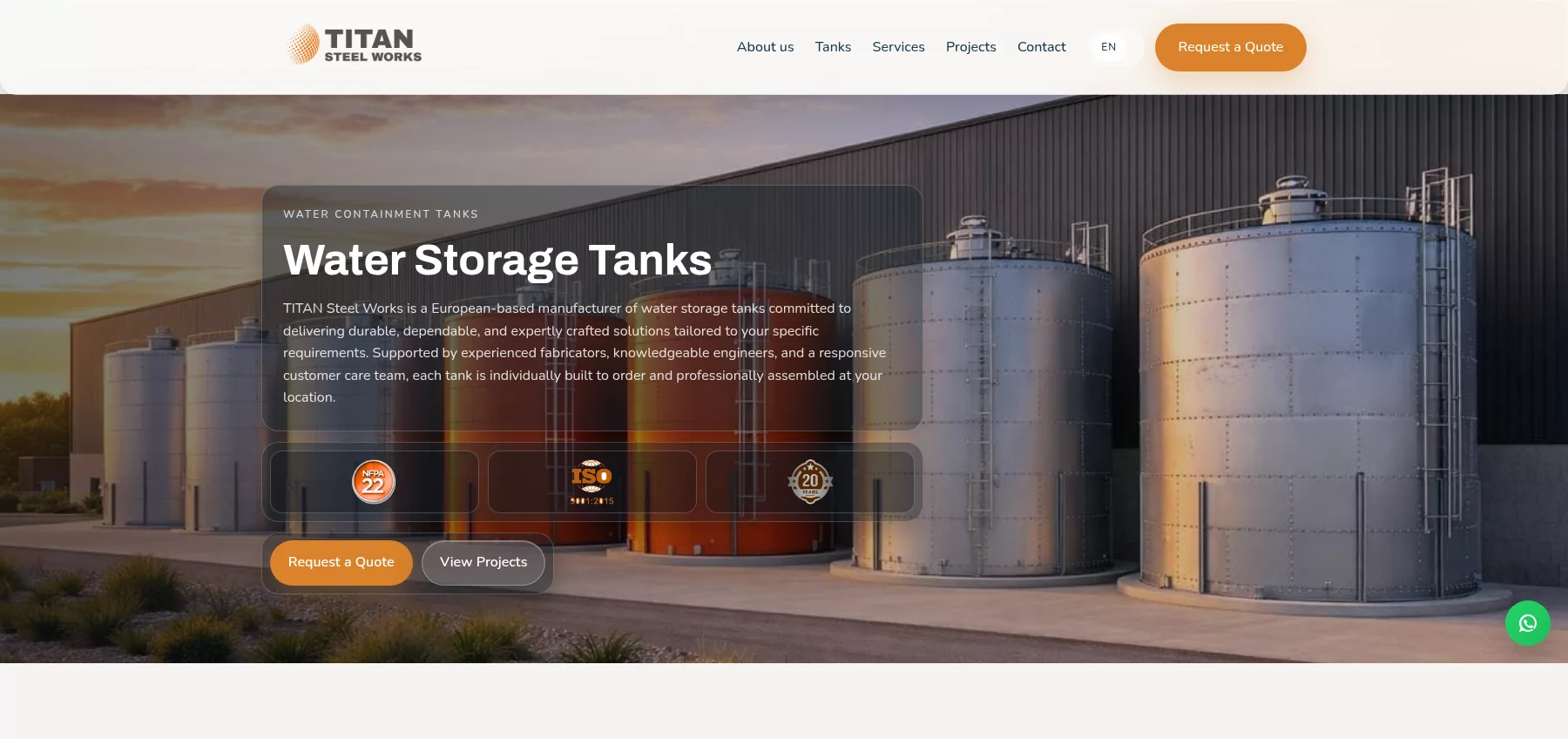
TITAN Steel Works: multilingual B2B website and Google Ads
A five-language website, technical product pages and an RFQ journey for an industrial manufacturer.
Read the case study →Discuss your project with Newton Marketing
Get a scoped next step for a website, Google Ads account or lead-generation system.
