A multilingual B2B website needs more than a language switcher. Each language version needs a clear market purpose, readable local copy, consistent URLs, correct hreflang references and enough technical and commercial information to answer the buyer’s question independently.
Choose languages by commercial demand
Begin with existing enquiries, target countries, sales capacity and search demand. Adding a language that the sales team cannot support usually creates an unmaintained surface rather than a new market. Prioritise languages where the company can respond, deliver and provide credible proof.
For technical offers, the same term may be used differently across markets. Keyword research should therefore be performed per language and product group, not copied from a single English or Russian list.
Build a clean language architecture
Each language needs its own stable URL. The language selector should lead to the matching version where possible, while search engines receive canonical URLs and reciprocal hreflang links. Navigation, titles, descriptions, forms and WhatsApp messages should match the selected language.
- Keep one URL per language and avoid automatic redirects based only on browser settings.
- Use the same information architecture where the offer is the same, but allow market-specific pages when demand differs.
- Include every indexable language page in the XML sitemap.
- Do not leave partially translated navigation, forms or media captions.
Translate commercial meaning, not words
Literal translation often loses the terms buyers actually search for and makes the company sound unfamiliar with the market. Product claims, units, certification references, delivery conditions and calls to action need editorial review by someone who understands the language and industry context.
That is particularly important for engineering, manufacturing and regulated services. A visitor should not need to switch language to find a specification, project example or commercial contact.
Technical SEO and content governance
Multilingual SEO is a maintenance discipline. When a product page changes, define which language versions must be updated. Measure organic landing pages and enquiries by language so you can see whether a market produces useful demand rather than visits alone.
For TITAN Steel Works, Newton Marketing created a five-language B2B structure with product, engineering, project and specification routes leading to a commercial request. The language architecture supports both technical research and quote-focused acquisition.
FAQ
Questions clients ask before making a decision
Are language subfolders better than separate domains?
Subfolders are usually easier to operate because authority, analytics and technical maintenance remain on one domain. Separate domains can make sense when markets need independent brands, teams or legal structures.
Does hreflang translate or rank a page?
No. Hreflang helps search engines understand equivalent language or regional URLs. Each page still needs indexable HTML, relevant local content, a canonical URL and internal links.
Can machine translation be used for a B2B website?
It can support a first draft, but technical terms, claims, calls to action and legal or delivery information need human review. The published page should read naturally and answer the local buyer independently.
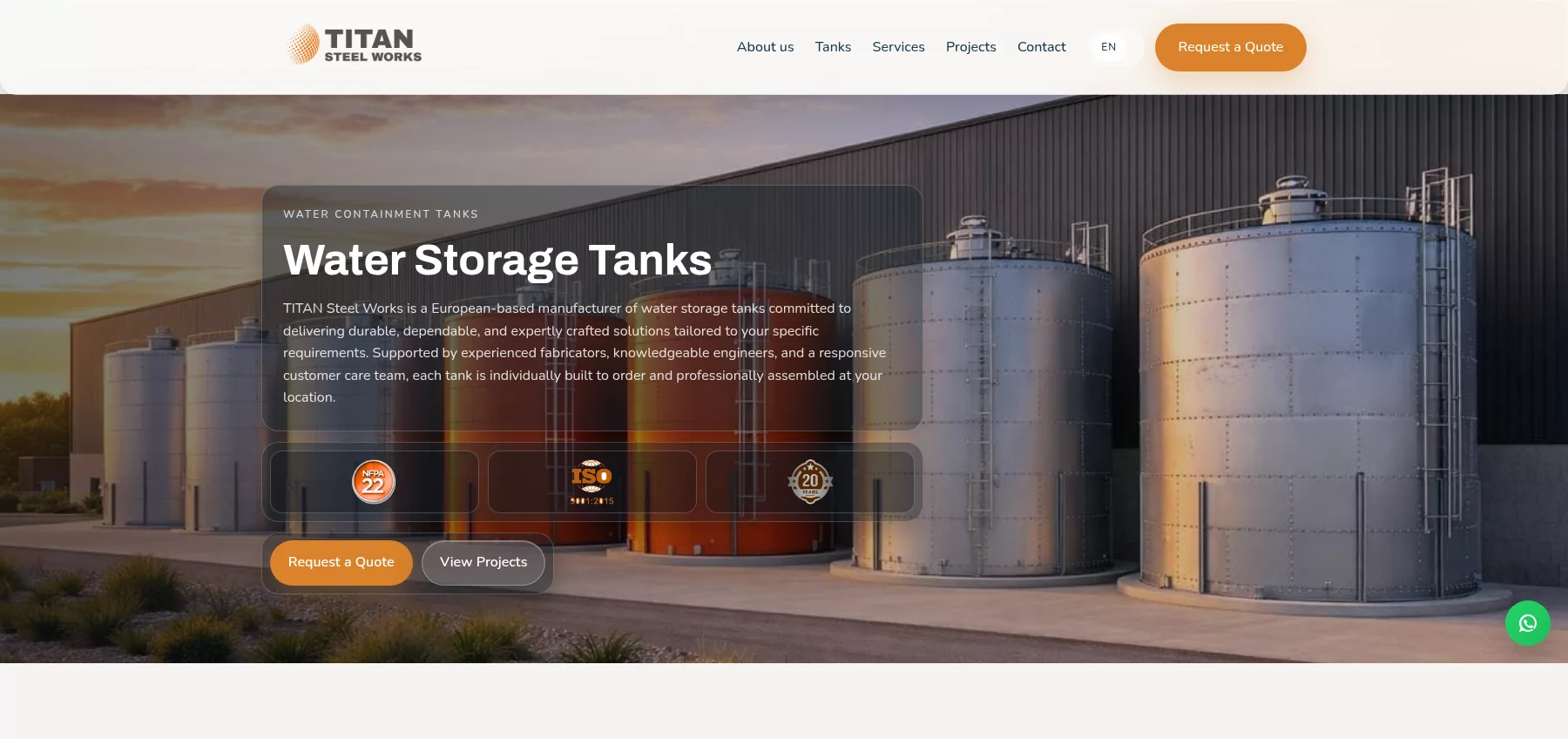
TITAN Steel Works: multilingual B2B website and Google Ads
A five-language website, technical product pages and an RFQ journey for an industrial manufacturer.
Read the case study →Discuss your project with Newton Marketing
Get a scoped next step for a website, Google Ads account or lead-generation system.
